Foreword
Dutch Pilotage Service Organisation escorts tens of thousands of seagoing vessels safely and smoothly to and from Dutch ports and Flemish ports on the River Scheldt every year – day and night, whatever the weather. This was also the case in 2025, a year marked by ongoing geopolitical, economic and digital challenges, which gave our operation a more emphatic security dimension. After all, ports are not only the engine of the economy, but also the gateway to the Netherlands and Europe. As the eyes and ears at sea, the pilots and employees of Dutch Pilotage Service Organisation therefore contribute to keeping this vital infrastructure open, safe and resilient.
Financial developments
In 2025, Dutch Pilotage Service Organisation did not achieve the estimated number of piloted trips. The results varied considerably by region. The Amsterdam-IJmond and North regions performed above the estimate, whereas in the Rotterdam-Rijnmond region, demand decreased partly due to the departure of companies caused by a deteriorating investment climate, which affected trade flows. The River Scheldt region saw a slightly higher than estimated number of trips for vessels bound for Dutch ports, while shipping bound for Belgian ports was less than estimated.
Resilient
The complex geopolitical developments had an effect on Dutch Pilotage Service Organisation’s remit. Although we are an operational organisation, we are increasingly aware that we are also a strategic partner for national security. This new role is a wake-up call for policymakers. It calls for a structurally reinforced relationship with the Dutch government, with Dutch Pilotage Service Organisation being viewed more explicitly as a security policy partner. We would like to see this reflected in the way our organisation is funded. Together with policymakers, we are exploring the possibilities of using laws and regulations to support this partnership. During his visit to Dutch Pilots’ Organisation in Rotterdam, we spoke to outgoing Minister Robert Tieman of the Ministry of Infrastructure and Water Management about our shared concerns relating to the Netherlands’ territorial integrity and the vulnerability of digital systems and infrastructure to sabotage and attacks (including cyberattacks).
Closer cooperation in the maritime chain
Dutch Pilots’ Organisation is expected to be designated as a critical entity under the Dutch Critical Entities Resilience Act (Wet weerbaarheid kritieke entiteiten, Wwke), which was debated in the House of Representatives at the end of 2025. The efforts to strengthen our digital and other infrastructure and maintain continuity in the ports were carried out in close cooperation with ministries, port authorities, terminals and maritime partners. These partners all realise that the Netherlands cannot afford to have any weak links in the maritime chain.
In addition to this, Dutch Pilotage Service Organisation drew attention to risks such as the Russian shadow fleet, unknown drones in ports and the undesirable effect of Russian holders of Pilotage Exemption Certificates (PEC). By law, we are designated to train frequently visiting captains as PEC holders at the request of shipping companies. This gives them knowledge about our vital infrastructure. Our training is non-discriminatory, which means we also train Russian captains. This situation is worrying and requires careful consideration.
New vision
In 2025, Dutch Pilotage Service Organisation’s new joint vision document Mission – Vision – Strategy (MVS) 2026-2030 was adopted. It is based on three pillars and 23 concrete objectives for the next five years. Four core values have also been identified: safety, reliability, commitment and expertise. The ‘safety’ core value is a new addition, making the safety statement an integrated part of the new vision.
Visible and attractive
Given the structural shortage of seafarers, amounting to tens of thousands worldwide, recruitment remained a key priority. The new OTR:MMP pre-Master’s programme for secondary vocational (MBO) students launched in September now allows us to recruit talent from a broader target group. In addition, we launched a new video about Dutch Pilots’ Organisation and, together with the Dutch Maritime Network, launched the Mpowered campaign, which focuses on the strength, relevance and indispensability of the nautical sector.
The presence of Dutch Pilotage Service Organisation at maritime events, such as the World Port Days in Rotterdam, regional port days, trade fairs and job fairs, remained key to increasing our visibility. SAIL Amsterdam 2025 provided a unique opportunity to highlight our work. Together with regional partners, the Amsterdam-IJmond region put in a special performance by successfully managing the event, in addition to handling regular shipping. We welcomed our stakeholders on board the ‘Procyon’ pilot vessel. Sailing as part of the SAIL-in and SAIL-out parades was also a very memorable experience for me personally.
Farewell
Finally, a personal note. This is my last official contribution to the annual report. On 16 April 2026, I will step down as president of Dutch Pilots’ Corporation. It is not a permanent farewell, as I am ending my career where it began: as a pilot in the Amsterdam-IJmond region. I am handing over the gavel to Georg Jaburg, pilot and President of Scheldt Regional Pilots’ Corporation. I am confident that Dutch Pilotage Service Organisation will be in good hands under his presidency, in cooperation with NLBV and our maritime partners.
‘Samen Veilig & Vlot’ (safe & afloat together).
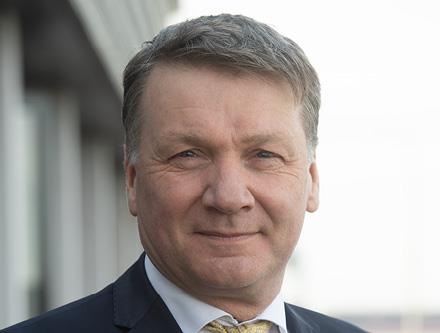
Willem Bentinck
President of Dutch Pilots’ Corporation
2025 at a glance
In a world full of geopolitical tensions, Dutch Pilotage Service Organisation maintained a steady course in 2025 with a focus on innovation. Internally, we took steps in the areas of equipment, governance, culture and working methods, while externally, we strengthened our position as a vital link in the maritime chain.
Dutch Pilotage Service Organisation achieved around 2,000 fewer trips in 2025 than budgeted, a deviation of 2.3%. Gross pilotage dues remained relatively stable at -1.3% below budget. This was partly due to more arrivals of larger, more heavily laden ships with a deeper draft, which are subject to higher pilotage rates.
Nevertheless, there were concerns, particularly in the Rotterdam-Rijnmond region. Fewer container feeders were handled in the port, and high energy costs and taxes, fierce international competition and the resulting loss of hundreds of jobs led to concerns about the port’s competitiveness. These concerns were reinforced by the structural crisis in the European chemical and petrochemical industries, causing companies to reconsider their investments in Europe.
At the same time, the energy transition presents opportunities. The Amsterdam-IJmond region benefitted from new cargo flows due to the energy transition and welcomed more ships than expected. The North region achieved a higher number of trips due to the growth in the number of LNG vessels and the offshore wind industry. Furthermore, potato shipping in this region resulted in more trips.
Wamr evaluation
Ensuring 24/7 availability is our core task. In the upcoming evaluation of the Dutch law updating the market regulatory system for registered pilots (Wet actualisatie markttoezicht registerloodsen, Wamr), we will draw attention to the continuity and funding of our services as part of the critical infrastructure. Our objective is for the focus to shift from efficiency to safeguarding services if demand drops or in the event of external threats.
New mission, vision and strategy
In late 2025, our members approved the Dutch Pilots’ Organisation Mission – Vision – Strategy (MVS) 2026-2030 vision document. This document provides direction on what Dutch Pilotage Service Organisation stands for, where we are heading and how we want to get there as an organisation. Our strategic mission is based on three pillars: we are a leading organisation that is uniquely positioned in the maritime chain, we consider good employer practices important for our employees and we stand for an attractive profession for registered pilots.
Compared to the MVS 2019–2025, the new strategy has two key changes. Firstly, safety has been added as a fourth core value, alongside reliability, commitment and expertise. Secondly, the strategy is specified in more detail than in the previous MVS. The main challenges have been systematically mapped out and translated into 23 action points, which have been grouped into three pillars: being a leading organisation, having a unique position in the maritime chain and being an attractive profession. The action points focus on things like sustainability, technical innovation, external physical and cyber threats, cost pressures, the attractiveness of the profession and good employer practices.
All entities within Dutch Pilots’ Organisation detail these principles further in their 2026 policy plans that align with the MVS. The regions’ policy plans are based on the principle of doing things together where possible, and regionally where necessary.
Social safety
A cultural survey was carried out in early 2024. It revealed room for significant improvements within NLBV in the field of cultural experience. In order to ensure people’s safety on the work floor, an inappropriate behaviour reporting centre was set up in 2024 and the code of conduct was updated. A campaign was also developed regarding social safety and an external confidential counsellor was hired for employees who were in need of this.
Safety at sea and on shore
The new safety statement ‘Samen Veilig & Vlot’ (safe & afloat together) forms an integrated part of the MVS 2026-2030. The statement expresses the shared ambition that everyone should always return home safely and in good health. At the same time, it emphasises that safety is the result of collaboration and mutual trust.
In April, the International Maritime Organization (IMO) refined the SOLAS regulations with resolution MSC.576 (110) (SOLAS stands for Safety of Life at Sea). The refinement focused in particular on making pilot ladders safer. Together with the International Maritime Pilots’ Association (IMPA), Dutch Pilotage Service Organisation has campaigned for this for many years.
Incidents
Dutch Pilotage Service Organisation was involved in a serious shipping accident in the port of Rotterdam in 2025. In addition, the regions adjusted their procedures following the publication of a report by the Dutch Safety Board on an incident involving a special transport in 2024 in the port of Rotterdam. Following this incident, each region agreed with the port authorities on a standard procedure for special transports, and a Special Transport Regulations manual was drawn up. The aim is to reduce the likelihood of recurrence. It therefore is and remains important to carefully evaluate incidents and analyse why things went wrong.
Vision on leadership
In 2025, a programme was developed that supports managers across Dutch Pilots’ Organisation and provides direction for their work. This programme resulted from the cultural survey conducted among employees in 2023, which revealed a distinct need for a clear vision on leadership and unambiguous behavioural guidelines for managers. This vision and the behavioural guidelines were discussed. A leadership programme will follow in 2026.
Public safety
Threats of war in Europe, economic sanctions and natural disasters are issues that Dutch Pilots’ Organisation wants to anticipate more than ever. Geopolitical tensions became visible in 2025 through the bunkering of the Russian shadow fleet (ships carrying Russian oil under a different flag) evading Western sanctions. Russian PEC holders also pose a dilemma. Dutch Pilotage Service Organisation trains these captains. After their training, they are allowed to sail independently to, from and within our ports. This gives them knowledge of and access to vital infrastructure. The legal basis for this scheme makes its withdrawal complex. With support from several state harbour masters, Dutch Pilotage Service Organisation has sent a letter to the Minister of Infrastructure and Water Management and the Minister of Defence, expressing our concerns about this and indicating that we want to contribute constructively to a structural solution.
Consultations on external threats with maritime partners, including port authorities, the coastguard, the Ministry of Defence and the Ministry of Infrastructure and Water Management, became more structured in 2025.
Digital safety
Our public duty to contribute to resilient ports also brings with it greater responsibility for our digital security. Dutch Pilots’ Corporation investigated how pilots can safely navigate in and out of ports independently of external digital systems, such as satellites. To this end, we will invest in navigation support equipment that is more resistant to spoofing and jamming. In this context, we also facilitated a number of consultations with stakeholders and the FERM foundation to increase our resilience. Finally, we held training sessions to prepare our directors for the implementation of the European NIS2 Directive for cybersecurity of critical entities. Dutch Pilotage Service Organisation was supported in this by the National Cyber Security Centre (NCSC).
Undermining
As gateways to the Netherlands and Europe, seaports are vulnerable to crime such as drug trafficking, smuggling and fraud. In 2025, ports were designated as high-risk areas and the Ministry of Justice and Security introduced the Port Area Certificate of Good Conduct (VOG) for screening employees. Dutch Pilotage Service Organisation (NLBV) held a pilot with the VOG for crew members on full-time duty.
Recruitment
Over 20 people enrol in the pilot training programme each year. In September 2025, STC Next in Rotterdam launched the OTR:MMP pre-Master’s programme at the request of Dutch Pilots’ Corporation, offering seafarers with a secondary vocational (MBO) diploma the opportunity to become a registered pilot. Ten of them have started the programme and are taking six modules alongside their jobs, largely online. They are doing so with motivation and enthusiasm, according to the lecturers who are themselves also very positive about the programme.
Visibility
To recruit new talent, Dutch Pilotage Service Organisation attended national and regional job fairs and maritime events, such as the World Port Days in Rotterdam and SAIL Amsterdam 2025. We also approached the target group through multimedia channels: we launched a new video about Dutch Pilotage Service Organisation and contributed to the Portlantis port experience centre, where visitors can find out what it is like to stand on the bridge of a container ship thanks to a hologram of registered pilot Eva. Together with the Dutch Maritime Network, we developed ‘Mpowered’: a campaign that highlights the usefulness and necessity of the maritime sector.
Committed pilots and employees
Pilots and employees were actively involved in the future of the organisation and the essential issues at stake. They came together in two inspiring sessions at the RDM shipyard in Rotterdam and provided input on the MVS 2026-2030. Their input was incorporated into the final vision document.
Project management
Since 2024, NLBV has been working with PMO (Project and Management Office) to streamline projects and improve financial agility. To involve other employees in this approach, NLBV organised the ‘Connect and Engage’ meeting in May 2025, where PMO project managers talked about their work: from the fleet to IT and from the offices to being on the water.
Research and innovation
The R&D working group kept a close eye on technological developments within and outside the maritime sector and looked into which innovations Dutch Pilotage Service Organisation could apply. An environmental analysis identified numerous topics. In 2025, the focus was on reducing the vulnerability of port accessibility and modernising the Global Navigation Satellite System (GNSS).
Sustainability
In terms of sustainability, 2025 was a transitional year with the completion of major multi-year projects. Dutch Pilotage Service Organisation achieved the target of a 12.5% reduction in carbon emissions compared to 2020. Sustainability measures for the offices and fleet were largely completed and electric taxi transport was further extended.
The Rotterdam-Rijnmond region got a new helicopter hangar with 144 solar panels. To cope with grid congestion and possible power cuts, an emergency power supply was installed. With an emergency generator and battery packs, the region can provide 1.6 million kilometres of electric taxi transport annually. The facility is an example of how Dutch Pilotage Service Organisation ensures continuity in operations by operating more independently.
The replacement of the M-class tenders, which will save 30% fuel, was completed with the commissioning of the ‘Maud’ and ‘Milo’. The last project (for now) for new sailing equipment started in April. It involves the construction of two swaths with hybrid propulsion and electric drives for the River Scheldt region.
Digital optimisation
IT and data remain crucial for optimising our processes. Following HR and crew affairs, Dutch Pilotage Service Organisation started the project to roll out new ERP software for fleet management, procurement, finance and IT. This expansion is part of the RADAR project (Robotisation, Automation, Digitalisation as a Result). The software will be implemented in 2026 and will allow customised administration systems to be set up for each department.
Lutine project
In the multi-year Lutine project, data analysis is used to monitor, report and verify maintenance and fuel consumption on tenders, in combination with weather conditions and navigation behaviour. In 2025, IoT devices were installed on a large part of the fleet, making it possible to monitor maintenance and navigation behaviour online. Amsterdam-IJmond Regional Pilots’ Corporation successfully tested Lutine, and the other regions will adopt the system in the future. Over time, it will be used to train employees and give them insight into navigation behaviour and maintenance.
In addition, devices were used in 2025 to measure G-forces on M-class tenders. The crew members had differing opinions on comfort levels on the new tenders. We will look into this further in 2026.
Dialogue with stakeholders
Nautical partners are indispensable to Dutch Pilotage Service Organisation in providing the best possible service. Having a good dialogue with them is crucial. As well as the usual annual consultation with the sector about the quality of services and pilotage dues, we engaged our stakeholders at an informative meeting in the creation of the new MVS and the updated quality regulation, which includes a five-yearly inspection. In addition, the Rotterdam-Rijnmond region conducted a series of discussions with stakeholders, which led to a better understanding of their wishes and their perception of Rotterdam-Rijnmond Regional Pilots’ Corporation.
Cooperation with authorities
Lines of cooperation with the coastguard and the Customs Administration became significantly shorter. Like us, these bodies are the eyes and ears of the Netherlands at sea. And for all parties, it is crucial that suspicious situations are reported quickly and unambiguously. In 2025, we worked together structurally on scenarios such as prolonged power outages, cyber threats and host nation support (NATO troop movements). Together, we worked out scenarios and explored how we can support and strengthen each other in an emergency.
The basic goal remains having a long-term relationship with nautical partners, stakeholders and authorities: monitoring developments, strengthening networks, optimising the value chain by sharing knowledge and data and kindling people’s enthusiasm for maritime professions. That is our mission, now more than ever.
New pension system
On 1 January 2025, the Professional Pension Fund for Maritime Pilots (BPL) was one of the first professional organisations to move to a new pension system that complies with the Dutch Future Pensions Act (Wet toekomst pensioenen). We are very proud of that. It is an important moment, because most pensions have not increased much, if at all, in recent years. After the transition, BPL will be able to use investment income more quickly to increase pensions. Conversely, pensions can also fall when results are disappointing. A buffer, the solidarity reserve, has been put in place to absorb decreases wherever possible.
On 1 January 2025, Dutch Pilotage Service organisation employees also transitioned to a new pension scheme under the Dutch Future Pensions Act. The pension scheme is a flexible contribution scheme with no risk-sharing reserve and no collective benefit phase. Pension entitlements already accrued up to and including 31 December 2024 will remain insured with the current provider and will not be affected by this change.
On 1 January 2025, Dutch Pilotage Service organisation employees also transitioned to a new pension scheme under the Dutch Future Pensions Act. The pension scheme is a flexible contribution scheme with no risk-sharing reserve and no collective benefit phase. Pension entitlements already accrued up to and including 31 December 2024 will remain insured with the current provider and will not be affected by this change.
|
Key figures table |
2025 |
2024 |
|
Total number of acts of pilotage |
87.628 |
89.326 |
|
Of which: Dutch Scheldt |
79.109 |
80.612 |
|
Of which: Flemish Scheldt |
8.519 |
8.714 |
|
Of which: North region |
3.995 |
3.947 |
|
Of which: Amsterdam-IJmond region |
13.466 |
12.871 |
|
Of which: Rotterdam-Rijnmond region |
50.594 |
52.468 |
|
Of which: Scheldt region |
19.573 |
20.040 |
|
Total revenue (x €1,000) |
257.922 |
241.392 |
|
Result (x €1,000) |
2.712 |
-3.276 |
|
Average number of registered pilots (in FTEs) |
||
|
North region |
17,73 |
17,07 |
|
Amsterdam-IJmond region |
64,58 |
65,58 |
|
Rotterdam-Rijnmond region |
219,89 |
217,71 |
|
Scheldt region |
163,2208333 |
166,69 |
|
Total |
465,4208333 |
467,05 |
|
Average number of employees (in FTEs) |
||
|
With an employment contract |
449,27 |
448,59 |
|
Flex pool |
52,04 |
38,61 |
|
Total |
501,31 |
487,2 |
|
Investments (x €1,000) |
29.350 |
27.163 |
|
Capital base (x €1,000) |
123.002 |
107.507 |
|
Current ratio |
1,62 |
1,47 |
|
Solvency ratio |
38,50% |
39,50% |
Profile
Mission, vision and strategy
Dutch Pilotage Service Organisation is an independent organisation that works in the public interest. Our main charge is the pilotage of seagoing vessels to and from all Dutch seaports and the Flemish ports on the River Scheldt. In this way we contribute to the safety of ships and crew, the economic success of ports and the protection of public security interests associated with maritime sea transport. The charge of providing pilotage services is exclusively reserved for registered pilots. The Netherlands Authority for Consumers and Markets (ACM) monitors the price development of our services and annually sets the tariffs for ships calling at Dutch ports.
Dutch Pilotage Service Organisation established the Dutch Pilots’ Organisation Mission – Vision – Strategy (MVS) 2026-2030 in 2025. This is the vision for the entities with different tasks that together provide the pilotage service in the Netherlands and the Flemish ports on the River Scheldt.
Mission
Our updated mission statement reflects what we stand for as an entire organisation. It shows the embedding of the ‘pilotage’ safety instrument, the way in which Dutch Pilotage Service Organisation interprets it and its importance for third parties. Our mission is:
As a leading organisation in the maritime world, Dutch Pilotage Service Organisation stands for safeguarding port safety and port accessibility. Our primary task is the safe and smooth pilotage of seagoing vessels to, from and through Dutch seaports and Flemish ports on the River Scheldt. In this way, we contribute to safe and accessible ports and to the safe functioning of the Netherlands. Our continuous deployment in vital maritime locations makes us an indispensable link in the national security chain.
Vision
Our new vision describes our view of the future and our place in it: what are the developments we see in our environment to which we would like to contribute? The vision of Dutch Pilotage Service Organisation is:
However much the world around us changes, seaports continue to play an important role as an international gateway, acting as the economic engine of the Netherlands and beyond. As Dutch Pilotage Service Organisation, we are an indispensable link in ensuring the safety and accessibility of ports and national security.
Strategy
In a world where technology is playing an increasingly important role and geopolitical uncertainties are affecting the maritime sector, Dutch Pilotage Service Organisation faces a strategic challenge: structurally anchoring our contribution to the safe functioning of the Netherlands, not only in a nautical and operational sense, but also as a partner in the national security chain. Derived from our strategic mission, three pillars have been formulated on which Dutch Pilotage Service Organisation will be focusing in the coming years:
Being a leading organisation. “We are the nautical experts, both now and in the future.”
Having a unique position in the maritime chain. “We add value on board and from the shore.”
Being an attractive profession. “We ensure that working with us is an attractive prospect.”
Role of the pilot
In 2025, 22 students started the registered pilot training programme (OTR:MMP 14) and 20 pilots were sworn in after successfully completing OTR:MMP 13. On the instruction of Dutch Pilots’ Corporation, STC Next launched the OTR:MMP pre-Master’s programme, which prepares experienced seafarers with a secondary vocational (MBO) level 4 qualification for the higher professional (HBO) Master’s programme to become a registered pilot (Master in Maritime Piloting). Ten candidates started the six-module bridging programme alongside their jobs. They are working with motivation and enthusiasm, according to the lecturers who are themselves also very positive about the programme.
Safety, reliability, commitment and expertise are the core values for the pilots and employees of Dutch Pilotage Service Organisation. These four values form our moral compass and the core of our organisation.
Safety
We guarantee the safety of people, vessels and the environment – under all circumstances. With expertise, diligence and an eye for risks, we ensure safe work processes and navigation. For us, rather than being a free choice, safety is a natural foundation of everything we do. In addition, we contribute to the safe functioning of the maritime chain through our deployment in vital locations.
Reliability
We are reliable, because shipping needs us and can count on us. We carry out our work on time, with state-of-the-art equipment and in all weather conditions. We act in a non-discriminatory manner, we are always there. We are a reliable and predictable partner for all stakeholders, such as shipowners, port authorities, policymakers, other service providers and people who live and work in and around the port.
Commitment
Our pilots and employees are committed to Dutch Pilotage Service Organisation, because they enjoy being part of an organisation that fulfils an important social and statutory duty. This commitment manifests itself in taking responsibility and putting collective interests above their own. It is no coincidence that solidarity is one of the foundations of our business model. When pilots and employees are committed, we as Dutch Pilotage Service Organisation can continue to grow and improve our role in the maritime world more and more.
Expertise
We are experts, so we can offer security and live up to the trust placed in us. Our goal is to continuously improve our knowledge and skills through training, knowledge development and innovation. We take a critical approach: rather than being a given, our expertise is something we continue to develop for ourselves. We share our knowledge, skills and experience, either on request or on our own initiative.
Governance
Government agencies and regulatory authorities are setting increasingly stringent demands for the governance and transparency of semi-public organisations such as Dutch Pilots’ Corporation and the Regional Pilots’ Corporations. We endorse this social trend, as all our entities perform an important public service, and it is our responsibility to explain how we carry out our charge.
Dutch Pilots’ Organisation: a little background
Dutch Pilots’ Organisation was privatised in 1988 and we have operated based on two disciplines since then: the professional Dutch Pilots’ Corporation (NLc) and the corporate Dutch Pilotage Service Organisation (NLBV). After 1988, we grew into an organisation that responds to the latest market developments, listens to stakeholders and provides advice to partners in the nautical chain.
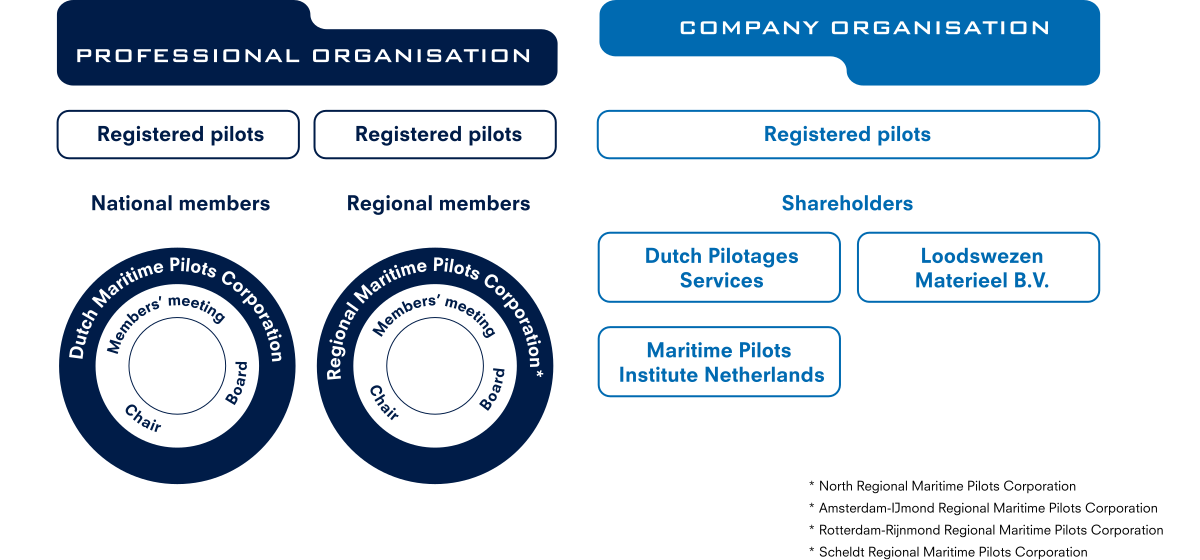
Dutch Pilots’ Organisation is the name under which a number of entities, each with their own tasks and responsibilities, jointly provide efficient pilotage services in the Dutch seaports and the Flemish ports on the River Scheldt. Dutch Pilots’ Organisation consists of a professional organisation (for the pilots) and a company organisation (for service and support).
Professional organisation
Dutch Pilots’ Corporation (NLc) is the public law part of the organisation and is involved in promoting the quality of the registered pilot profession and professional practice on a national level. Its statutory duties also include training future pilots and providing the professional pension fund. In addition, NLc adopts regulations and advises the Minister of Infrastructure and Water Management on issues set out in the Dutch Pilots’ Act (Loodsenwet) that affect the profession. It does so by itself and in cooperation with other stakeholders, such as harbour masters, to contribute to safe and easily accessible ports.
The professional arm of Dutch Pilots’ Organisation consists of Dutch Pilots’ Corporation (NLc) and the four Regional Pilots’ Corporations (RLc): North, Amsterdam-IJmond, Rotterdam-Rijnmond and River Scheldt.
Company organisation
The company organisation comprises Dutch Pilotage Service Organisation (NLBV), Loodswezen Materieel B.V., three silent partnerships (Regional Pilots’ Corporation Amsterdam-IJmond, Regional Pilots’ Corporation Rotterdam-Rijnmond/North and Regional Pilots’ Corporation River Scheldt) and the Maritime Pilots’ Institute Netherlands B.V. Dutch Pilotage Service Organisation (NLBV) provides services in the area of fleet management, maintenance, logistics, planning and administration in the boarding of pilots and pilotage of seagoing vessels and is charged with the collection of pilotage dues. Loodswezen Materieel B.V. is the legal owner of the fleet. The maritime pilots associations are the associations representing the registered pilots. The registered pilots are responsible for piloting seagoing vessels. Activities that are not directly aimed at the boarding of pilots and pilotage of vessels are conducted through the Maritime Pilots Institute’ Netherlands B.V. This knowledge centre concentrates on activities like offering nautical expertise to the maritime sector at home and abroad.
Regional Pilots’ Corporation (RLc)
The Amsterdam-IJmond, North, Rotterdam-Rijnmond and River Scheldt Regional Pilots’ Corporations are responsible for things like maintaining the number of pilots in their region, the regional training of new pilots and providing training to keep the knowledge of pilots up to date at all times. They also train PEC holders, captains who are exempt from compulsory pilotage.
STODEL
The foundation for training and promoting expertise of registered pilots (Stichting Opleidingen en Deskundigheidsbevorderingen Registerloodsen or STODEL) supports the training office, facilitates the recruitment and selection of candidates, pays out study allowances and takes care of permanent education for Dutch Pilots’ Corporation. The Regional Pilots’ Corporations and STODEL together fulfil statutory duties in the field of professional practice quality, professional competence, authorisations, service provision and training of pilots.
Company organisation
Dutch Pilotage Service Organisation (NLBV) focuses specifically on supporting registered pilots in carrying out their profession. The services consist of transporting pilots to and from seagoing vessels, performing administrative tasks and providing the digital infrastructure in support of the profession. We offer these services with over 450 committed professionals from NLBV’s office in Hoek van Holland and from the four regions.
The company organisation consists of Dutch Pilotage Service Organisation (NLBV), Loodswezen Materieel B.V., three silent partnerships (Regional Pilots’ Corporation Amsterdam-IJmond, Regional Pilots’ Corporation Rotterdam-Rijnmond/North and Regional Pilots’ Corporation River Scheldt) and Maritime Pilots’ Institute Netherlands B.V., which rather than providing activities directly related to pilotage work offers nautical expertise to the maritime sector at home and abroad.
The figure below gives an idea of the organisation of Dutch Pilots’ Organisation (not including the silent partnerships and STODEL).
Professional organisation and company organisation
Personal details
Composition of the General Assembly
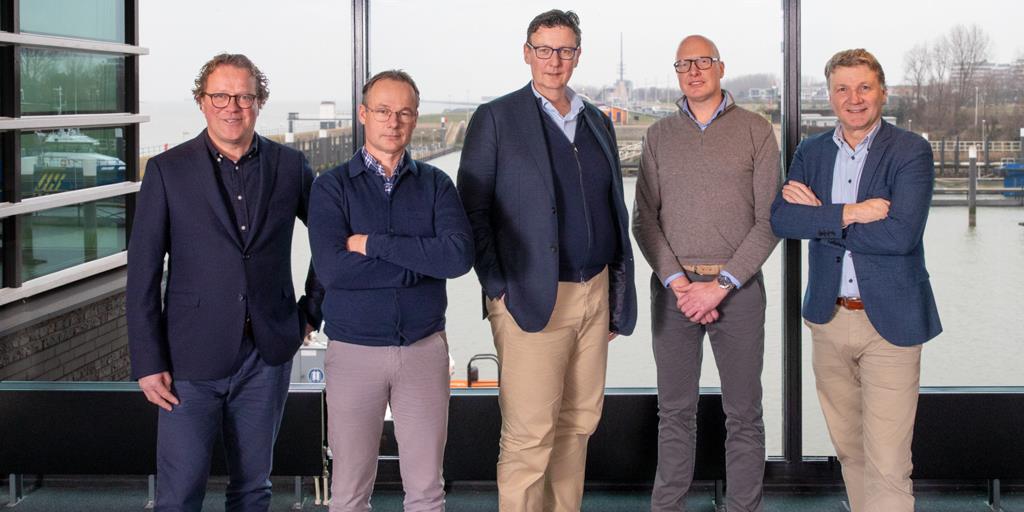
President, Dutch Pilots’ Corporation (NLc): Mr J. W. Bentinck, appointed on 1 May 2023, steps down on 1 May 2026. He will be succeeded on 16 April 2026 by Mr G. B. P. Jaburg.
Secretary, Dutch Pilots’ Corporation (NLc): Ms B. W. Silvis, appointed on 1 February 2023. Her employment ended on 1 November 2025.
President of North Regional Pilots’ Corporation: Mr E. J. Kilian. Appointed on 1 August 2022, steps down on 1 August 2026.
President of Amsterdam-IJmond Regional Pilots’ Corporation: Mr B. J. Blokker, appointed on 5 February 2025, steps down on 5 February 2029.
President of Rotterdam-Rijnmond Regional Pilots’ Corporation: Mr J. J. van Driel. Appointed on 1 July 2023, steps down on 1 July 2027.
President of River Scheldt Regional Pilots’ Corporation: Mr G. B. P. Jaburg. Appointed on 1 May 2018, reappointed on 1 May 2022, steps down on 1 May 2026.
NLBV Board of Directors, Management Team and Supervisory Board
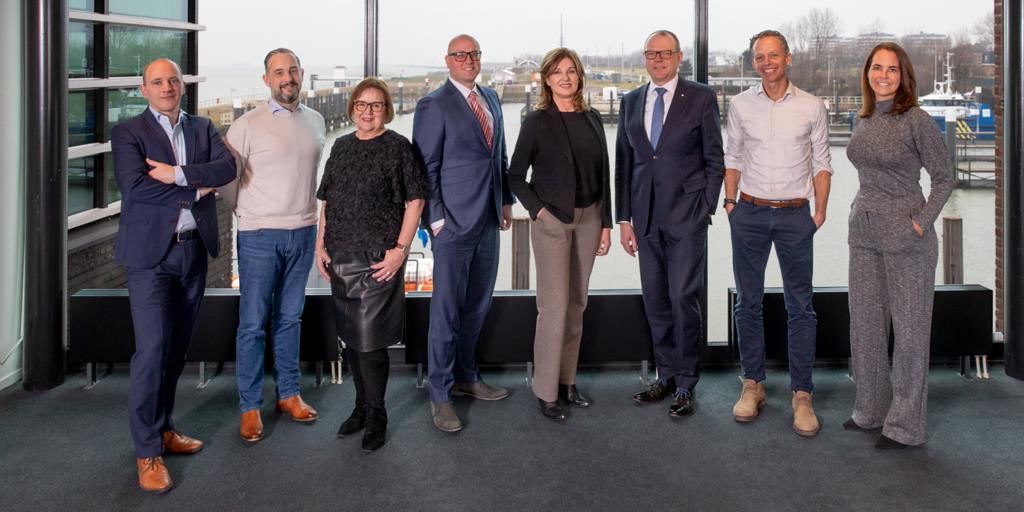
Board of Directors
Managing Director (under the articles of association): Mr H. B. W. Broers
Management Team
Financial Director: Mr M. Verrips
Human Resources Manager: Ms N. van der Drift
Fleet Manager: Mr P. Keijzer
Information Manager: Mr N. J. Donselaar
Crewing Manager: Mr S. van der Stap
Finance & Control Manager (advisory member): Ms E. A. E. M. de Bruijn
Supervisory Board
Mr M. J. M. Borsboom – steps down on 1 July 2026, Chair
Mr D. J. M. Schalck - expires 1 July 2028
Ms J. H. P. M. van der Wijst – steps down on 1 July 2027
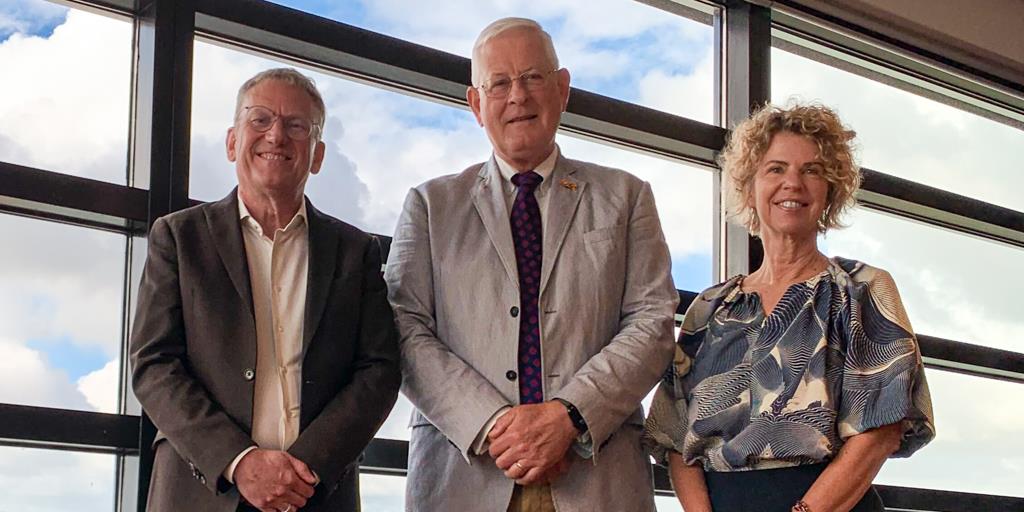
Balanced composition of Management and Supervisory Board members
Article 2:276 of the Dutch Civil Code includes requirements for ensuring a balanced ratio of men to women for Management and Supervisory Board members. In this article, a balanced ratio means that at least 30% of the seats are held by men and at least 30% by women (in so far as the seats are held by natural persons).
Dutch Pilotage Service Organisation (NLBV) has a single Managing Director under the articles of association. As this is only one person, no balanced ratio of men to women can be achieved here. The position is currently held by a man.
The Supervisory Board of Dutch Pilotage Service Organisation (NLBV) consists of three people. When a position becomes vacant, the ratio of men to women will be taken into account. Since 2012, the Board has had 33% female members, which meets the provisions for a balanced composition.